by Chief Glenn Usdin, former Chief, Lancaster Township, PA
It’s the mid-1980s, my home phone rings on Long Island at 2 AM. “Usdin, there’s a refinery fire in Philly! We need to GO! It’s huge!”
Steve Spak, a friend and noted NY fire photographer, was insistent we needed to be there. Between Steve and I, we’d seen hundreds, maybe thousands of fires; apartment houses, warehouses, stores, buildings, homes, just about every type of fire. But, never a refinery fire. I was out the door in minutes. It’s the mid 80’s, no cell phones or internet. Just scanners and TV.
Forty-five minutes, driving way too fast. to meet Steve and his buddy in Brooklyn. Over the Verrazano Bridge into Staten Island, then into New Jersey. Heading south on the New Jersey Turnpike, like the ‘Blues Brothers’ on a mission from God. About halfway through New Jersey, we start picking up bits and pieces of the fireground radio traffic on our programable Radio Shack® scanner. Soon the Philly fire channels come in loud and clear.
“National Foam is sending the foam trailer from Exton; ETA is 30-45 minutes!”
“All pipeline units set up your monitors to protect the adjacent tanks.”
“The foam trailer is here; we’re distributing the foam barrels now!”
About thirty miles out, we could see the glow on the horizon. We switched over to Route 295 South, directly to South Philly. Soon we could see a tiny spec of rolling fire at the bottom of the glow, and the voices on the radio were becoming more urgent and direct. Clearly a large fire in the tank was threatening to spread to the neighboring tanks.
Ten miles out, the sky was bright orange, almost daylight. Huge balls of flame were pulsing upward from the refinery, the black smoke was clearly defined from the sky and the fire extended at least 100’-200’ in the air. Cameras were loaded with film and double checked; we were going to get some of the best fire pictures ever taken. We crossed the Walt Whitman Bridge into Philly. I’m not gonna lie, we were hooting and hollering. This was clearly going to be the largest most spectacular fire we had ever seen.
A few more exits to go. Now we could see all the flashing lights from a huge response. Got to the exit, the fire was on our left. All we needed to do was spin around the exit ramp and park the car.
The fire radio barked out a simple order, “All units, start foam NOW!” We were just making the turn off the highway and were facing away from the fire. Before we looped around in the other direction, the neighborhood went dark. We pulled out of the turn and what had been the most explosive fire I had ever seen was a smoldering mess. Not even a single flick of fire remained. Maybe 30 seconds of foam and it was out.
We parked the car just outside the gates, got out for 5 minutes and didn’t even take out our cameras. There wasn’t a single picture to be made. We looked at each other, shook our heads and headed very dejectedly back to New York. After a very quiet breakfast, we said goodnight as the sun was coming up.
A wasted trip for a buff but a very valuable lesson for a command officer.
The Philadelphia Fire Department had seen this fire before. Some of them had tragic consequences. In August 1975, five Philadelphia firefighters were killed at a refinery blaze. They learned the lessons and applied the better tactics.
What is the lesson from this huge fire in a refinery that you can apply to your next fire?
It’s the most important scientific fact that all IC’s need to know. The holy grail of firefighting.
Ignore this lesson and your fires don’t get extinguished. Yes, they eventually go out. But the reason your community has a fire department is to extinguish fires, not to let them burn out on their own.
Before we can go onto any other complex fire situations, we need to master Required Fire Flow.
Back to the Philly fire. The PFD could have stretched a few 95 GPM foam eductors and run through 1,000 gallons of foam concentrate for hours. 3 or 4 lines on the fire, make a few foam puddles and the fire would have eaten up every drop of foam until there was no fuel left to burn.
Instead, they did the calculations of the surface area burning and calculated how much foam was needed. They gathered the foam and assembled the required amount of foam appliances and waited until everything was in place. Then they directed all of them to flow at the same time. Instantly, and I witnessed it, the fire went out. They applied the required fire flow and it worked. The science and art of firefighting, both worked that day.
Now let’s go to our suburban fire. I’ve heard the same thing hundreds of times. “We NEED to save water; we are a rural fire department.”
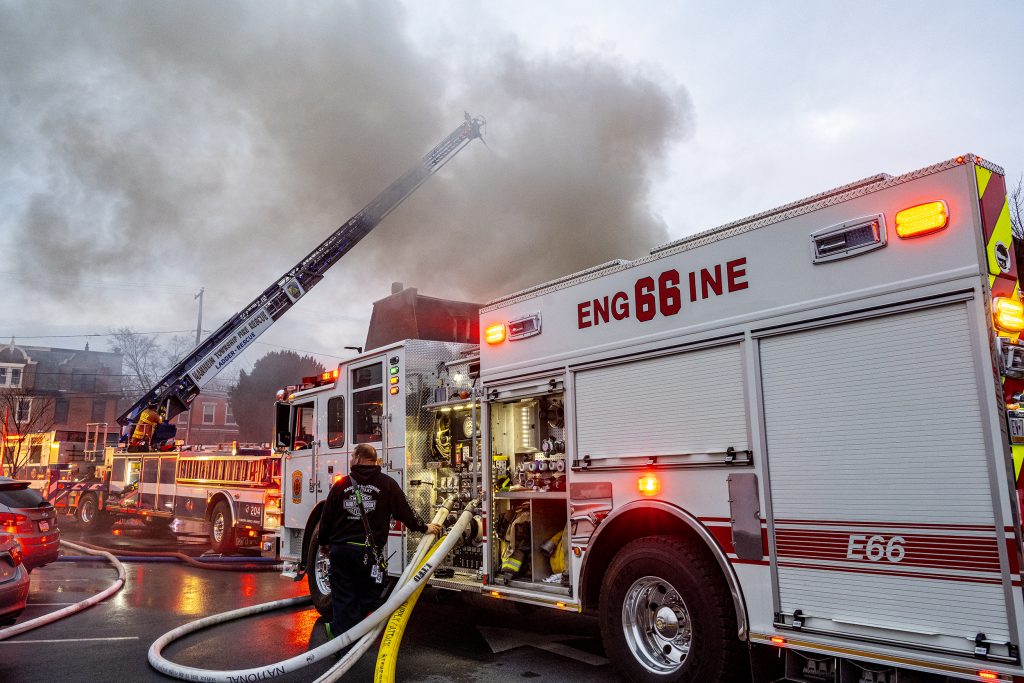
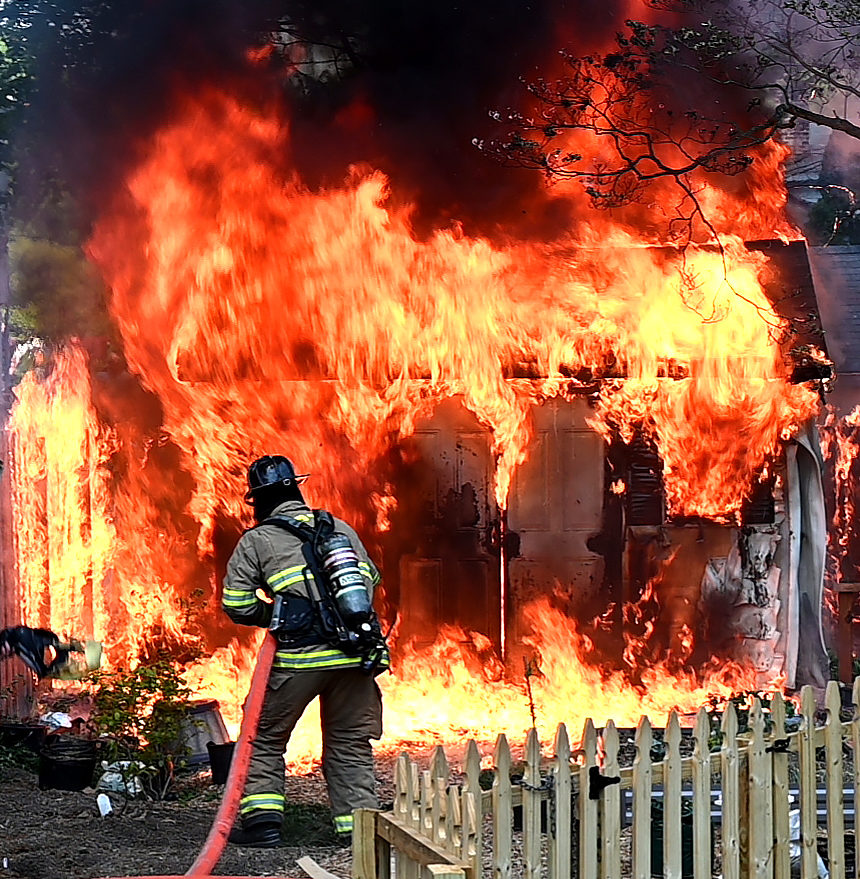
We start with 500 gallons of water and a few rooms going at a single-family dwelling. Our standard residential fire. You pull a 50 GPM booster line. After 10 minutes the booster tank is empty, you went through 500 gallons and the fire has extended to the rest of the house. You may say you didn’t have enough water. But the fact is, you had plenty of water.
They next company pulls up to their fire and places the deck gun stream into the 2 front windows and blasts the flames with a 500 GPM stream. (It doesn’t matter what nozzle they used, just the flow rate). In thirty seconds, the fire is knocked down, and they can take their 50 GPM line inside and mop up a few hot spots. They achieved knockdown with 250 gallons and had plenty left over for overhaul. The rest of the house is saved.
Same fire, same 500 gallons. The difference can be explained by science.
Before you accuse me of blasphemy, and craziness, NO, I don’t think anyone is taking a 50 GPM booster line into dwelling fires (You’re not, right?) nor do I think you need to blast a deck gun through two windows of the same house, though the monitor will put out the fire. I used them as extreme examples. Think about putting a campfire out with a squirt gun versus a garden hose. One will never do it, the other extinguishes it in a minute.
Until you flow water at the required fire flow, the amount of energy being generated by the fire is not being overcome by the extinguishing properties of the water. If the application rate is below the energy rate, the fire continues to burn until it burns down to the level of water you are applying.
There are two nationally recognized fire flow formula methods that most departments utilize. The oldest is the Iowa Method, which has been in place since the 1950’s. The second is the NFF developed by The National Fire Academy.
Here are the two formulas in very short summary:
The NFA formula is based on offensive interior operations where less than 50 % of the building is involved. The formula is: Needed fire flow = [(length x width) divided by 3] x percent of involvement
Example: For a 30′ x 50′ building that’s 25 percent involved, the flow would be 30 x 50 = 1,500 square feet, divided by 3 = 500 x 0.25 = 125 GPM.
The Iowa formula is: Required volume = (length x width x height) divided by 100.
Example: The same 30′ x 50′ building used in the first example is 10 feet high. 30 x 50 x 10 = 15,000, divided by 100 = 150 GPM. *
*Provided by Firefighter Nation
The Iowa formula is based on 30 second application rate and scientific calculations, while the National Fire Academy rate is based on information from various experienced fire officers. BOTH WORK.
In daily operations, you as the IC need to think about the rate as your guidance for everything you do. If you are not extinguishing the fire, you are letting it burn down to the rate that you are applying water.
Taking the mystery of why certain fires go out instantly, and others, well, don’t, is the difference between a new parking lot and a home or business that can be rebuilt. It’s also the difference between rescuing occupants and reducing firefighter injuries and deaths.
When the fire goes out, many your other problems go away. When you look at a fire, there are only two things that can happen.
It is getting bigger, or it is going out. Only you can make the choice. Next month, we’ll go into fighting your fires before they even start.
Be safe.